
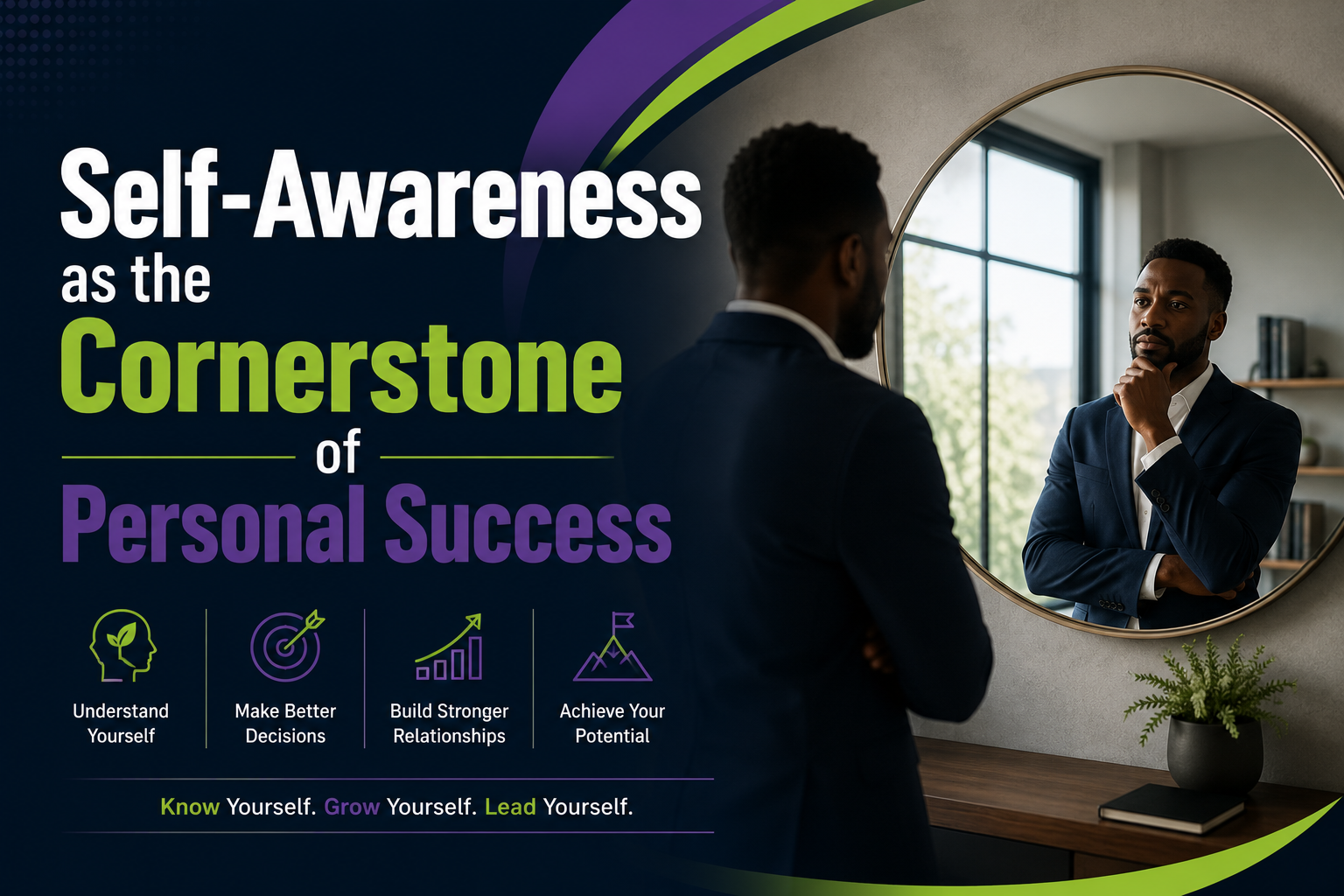
Success is often associated with talent, education, experience, and opportunity. While these factors are important, one quality consistently distinguishes high-performing individuals from the rest: self-awareness.
Self-awareness is the ability to understand your thoughts, emotions, behaviors, strengths, weaknesses, and motivations. It forms the foundation upon which personal and professional growth is built.
Why Self-Awareness Matters
People who understand themselves are better equipped to make decisions, build relationships, and respond effectively to challenges.
Without self-awareness, individuals may repeat ineffective habits, overlook growth opportunities, and struggle to understand how their actions affect others.
Self-awareness creates clarity. It helps individuals recognize what drives them, what limits them, and what they need to do to achieve their goals.
Understanding Strengths and Weaknesses
One of the greatest benefits of self-awareness is the ability to accurately assess personal capabilities.
Self-aware individuals understand:
- What they do well
- Where they need support
- Which environments help them thrive
- Which situations challenge them most
This knowledge allows them to make informed choices about career paths, leadership opportunities, and personal development goals.
Emotional Intelligence Begins with Self-Awareness
Emotional intelligence starts with recognizing and understanding emotions.
When individuals are aware of their emotional triggers, they can respond thoughtfully rather than react impulsively. This improves communication, decision-making, and conflict management.
Leaders with strong self-awareness are often more empathetic, resilient, and effective in building trust with others.
The Role of Feedback
Developing self-awareness requires openness to feedback.
Others often see behaviors and patterns that we may overlook. Constructive feedback provides valuable insights into how we are perceived and where opportunities for growth exist.
Receiving feedback with curiosity rather than defensiveness is a powerful step toward greater self-awareness.

Practical Ways to Build Self-Awareness
Self-awareness is not a fixed trait. It can be developed intentionally.
Effective practices include:
- Regular reflection and journaling
- Seeking feedback from trusted colleagues and mentors
- Leadership coaching
- Personality and behavioral assessments
- Mindfulness practices
Consistent reflection helps individuals identify patterns and make more intentional choices.
A Foundation for Lifelong Growth
Personal success is not achieved through external accomplishments alone. It is built on a deep understanding of who we are and how we engage with the world around us.
Self-awareness provides the foundation for better decisions, stronger relationships, and continuous improvement. It allows individuals to align their actions with their values and pursue goals with greater confidence and purpose.
In a world that constantly demands growth and adaptation, self-awareness remains one of the most valuable investments anyone can make in their personal and professional success.